

Smart Glasses vs Dash Cam: Which Records Incidents Better?

You get into a fender-bender in a parking lot. The dash cam on your windshield caught the other car driving away. What it didn’t catch: the driver getting out, walking to your window, and making threats. That exchange happened outside the camera’s frame — and you have zero evidence of it.
That’s the core limitation of a dash cam. It records what’s in front of your car. The rest of your reality? You’re on your own.
What Dash Cams Do Well
Dash cams have been the go-to for road incident recording for good reason. They’re always on, they record automatically, and they don’t require you to do anything in the moment.
For rear-end collisions, hit-and-runs, and capturing plate numbers while you’re moving, they’re excellent. A dash cam running on loop will silently document hours of footage you’ll never need — until the one moment you do.
The problem is that one moment often happens outside the frame.
Where Dash Cams Fall Short
Dash cams are fixed. They point forward — or backward if you have a dual-lens setup — and they cover your windshield view. But incidents are rarely that tidy.
Here’s what a dash cam routinely misses:
- Road rage confrontations where someone approaches your window on foot
- Parking lot disputes that happen beside or behind the vehicle
- Post-accident exchanges where the other party makes admissions or becomes aggressive
- Passenger-side incidents — a cyclist clipping your mirror, a pedestrian dispute at a crosswalk
- Anything that happens after you step out of the car — the dash cam keeps running, but it’s pointed at an empty road
The moment you exit your vehicle, your entire evidence-gathering capability goes dark.
What Camera Glasses Actually Capture
Smart glasses record from your point of view — literally what you see. The coverage follows you, not your windshield.
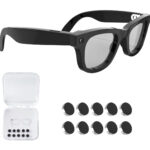
Aventa Smart Glasses shoot 1080p video and 12MP photos. They look like regular eyewear. There’s no phone to fumble for, no obvious recording device to escalate an already tense situation.
When someone approaches your window, you’re capturing their face, their behavior, and the full context of what’s unfolding. The built-in microphone means audio comes with it — conversations don’t disappear the way they do with a dash cam mounted six feet away on your windshield.
And if you get out of the car? You’re still recording.
Dash Cam vs Smart Glasses: Side by Side
| Feature | Dash Cam | Smart Glasses (Aventa) |
|---|---|---|
| Automatic loop recording | Yes | No — manually activated |
| Windshield / road coverage | Yes | Yes (when you’re behind the wheel) |
| Window confrontations | No | Yes |
| Outside-vehicle incidents | No | Yes |
| Clear close-range audio | Inconsistent | Yes — built-in mic |
| Works away from the car | No | Yes |
| Subscription required | Sometimes (cloud backup) | No |
| Price | $80–$200+ | $109 |
The Price Reality
A decent dash cam runs $80–$200. Add cloud storage for off-device backup and you’re paying monthly on top of that. Ray-Ban Meta smart glasses — the most well-known alternative in this space — cost $299, with the price heading higher. Some features require a Meta+ subscription.
Aventa costs $109. No subscription. Footage syncs to your phone over Bluetooth 5.0. That’s the full cost model.
The battery runs around 3 hours of active recording. The charging case extends that to a full day of intermittent use — enough for most daily driving situations. At 48g, they’re slightly lighter than Ray-Ban Meta, and they support prescription lenses if you need them (custom order, 7+ business days).
Who Should Consider Smart Glasses for Road Safety
- You drive in dense urban areas where road rage and parking disputes come with the territory
- You’ve had an incident where the dash cam missed what mattered — what happened at the window, not on the road
- You use rideshares or public transit and want personal recording capability that isn’t tied to a vehicle
- You already run a dash cam and want to close the gap on what it can’t see
- You wear prescription lenses — Aventa supports custom Rx orders, so you’re not choosing between vision and coverage
The Honest Verdict
If you want automatic, passive, windshield-forward recording that handles collisions and hit-and-runs while you’re not paying attention — a dash cam does that better. It’s passive, it’s always on, and it requires nothing from you after installation. That’s a real and meaningful advantage.
But a dash cam covers one angle of one type of incident. Smart glasses cover you — every angle, every location, the moment you step out of the car and the situation follows you.
For most drivers, the right answer isn’t either/or. A dash cam handles passive windshield coverage. Smart glasses handle everything the dash cam can’t see. At $109 with a 30-day money-back guarantee and 2–5 business day US shipping, adding that second layer of coverage doesn’t cost much.
If the gap between “what the dash cam captured” and “what actually happened” has cost you before, Aventa Smart Glasses are worth a look.
Last updated: May 2026