

Smart Glasses for Musicians: Record Gigs and Get Lyrics Hands-Free

You’re mid-song and you’ve blanked on the bridge. Or you just played the best take of that riff you’ve been working on for weeks — and your phone was face-down on the piano bench. Neither of those moments has to happen anymore.
The Problem with Recording as a Musician
Most musicians record practice sessions on their phone. It kind of works — until you want a first-person angle, need both hands on your instrument, or realize you’ve been recording from the wrong angle for 45 minutes straight.
A tripod helps. A dedicated camera helps more. But neither gives you the hands-free, first-person perspective that actually captures how playing feels — which is what viewers connect with on YouTube or Instagram Reels.
That’s where smart glasses become a practical tool, not a gimmick. For musicians specifically, the use case is more concrete than most people realize.
What Smart Glasses Actually Do for Musicians
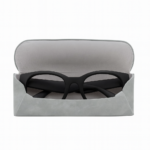
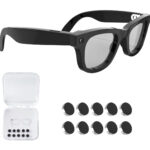
The Aventa G100 records 1080p video from your first-person perspective. If you’re at a piano, your audience sees your hands on the keys. If you’re playing guitar, they see the fretboard. That angle is physically impossible to replicate with a stationary camera — and it’s genuinely compelling footage.
Beyond video, the built-in voice assistant (ChatGPT-compatible) lets you ask for chord progressions, pull up lyrics, or check song structure without touching a screen. Open-ear speakers deliver audio from your phone without blocking out your instrument or bandmates.
Here’s what you can realistically use them for:
- Record practice sessions from your POV — 1080p video, 12MP photos. Useful for reviewing technique or posting clips without setting up a camera rig.
- Capture live performances — at 48g, they look like regular frames. Most audience members won’t notice you’re recording.
- Pull up lyrics or chord charts hands-free — ask the voice assistant mid-session without breaking your flow or reaching for your phone.
- Monitor a backing track or click — the open-ear speakers let you hear the room while audio from your phone plays in.
- Get theory help on the fly — ask the AI assistant about chord substitutions, key changes, or song structure during a writing session.
Aventa G100 vs Ray-Ban Meta: The Honest Comparison
The Ray-Ban Meta is the obvious alternative. It’s a genuinely good product — Meta has put serious resources into the hardware, and the AI integration is polished. If you’re already deep in the Meta ecosystem, it’s worth considering seriously.
But it costs $299. The Aventa G100 costs $109. That’s a $190 difference for hardware that covers the same core use cases most musicians actually need.
| Feature | Aventa G100 | Ray-Ban Meta |
|---|---|---|
| Price | $109 | $299 |
| Video quality | 1080p | 1080p |
| Photo resolution | 12MP | 12MP |
| AI assistant | Yes (ChatGPT-compatible) | Yes (Meta AI) |
| Open-ear audio | Yes | Yes |
| Weight | 48g | 49g |
| Battery (active use) | ~3 hours + charging case | ~4 hours |
| Subscription required | No | Meta+ for some features |
| Prescription lenses | Yes (+7 business days) | Yes (via Luxottica) |
| US shipping | 2–5 business days | Varies |
The Ray-Ban Meta has a slight edge on battery life and its AI integration is deeper. But for a musician using smart glasses to record and assist practice — not to live inside a social media platform — the Aventa holds its own on everything that matters.
Recording a Live Performance: What to Expect
The glasses pass as regular eyewear at a glance. Most audience members won’t know you’re recording, which matters if you play venues where pulling out a phone would break the mood — or if you just want to stay in the moment.
Battery life runs about 3 hours of active recording, and the charging case extends you through a full day. For a standard 45-minute to 90-minute set, you’ll be fine. A full marathon rehearsal session might push the limit — something to factor in before a long show.
The 1080p POV footage is genuinely useful for content: raw performance clips, technique reviews, or highlight reels cut into music videos. The built-in mic captures decent reference audio, but it won’t replace a dedicated recording setup for anything production-grade.
Using the AI Assistant During Practice
Because the voice assistant connects to ChatGPT, you can ask real questions — not just set timers. During a writing session, you can ask for the chord progression to a song, get explanations of modal theory, or check lyrics without breaking your playing posture.
This is most useful during practice and rehearsal. On stage with a full band, ambient noise makes voice commands less reliable — be realistic about that. But in a home studio or quiet rehearsal space, it’s a legitimately hands-free tool for the kind of quick lookups that usually mean reaching for your phone.
Who Should Buy the Aventa G100
- Solo musicians and YouTube creators who want first-person footage without hiring a camera operator or building a rig.
- Instrument teachers who want to record lessons from their own perspective so students can review technique from the right angle.
- Gigging musicians who want to capture performances without the distraction of a mounted phone or visible camera setup.
- Songwriters and home studio producers who want hands-free AI for theory lookups, lyric checks, and arrangement questions mid-session.
- Musicians who wear prescription glasses — the Aventa G100 supports custom Rx lenses on a +7 business day turnaround.
- Anyone who wants to try smart glasses without a $299 commitment — the 30-day money-back guarantee means the risk is low.
The Honest Verdict
Smart glasses solve a real problem for musicians — specifically, the problem of wanting first-person video and hands-free AI without a phone in your hand or a camera pointed at you. The use case is more practical than the tech press usually acknowledges.
If you want the most polished smart glasses experience with deeper social platform integration, the Ray-Ban Meta at $299 earns its price. The hardware is excellent and Meta AI is well-integrated.
But if you want POV recording, hands-free AI assistance, and wearable open-ear audio at a price that doesn’t sting if you’re testing the concept — the Aventa G100 at $109 is the honest recommendation. Same core specs, no ongoing subscription, ships in 2–5 business days from a US warehouse.
You can grab the Aventa G100 at aventaglasses.com with a 30-day money-back guarantee if it turns out not to fit your workflow.
Last updated: June 2026